
24/7 water damage help · Torrance, CA
Water Damage Restoration in Torrance, CA
Water on the floor, a stain spreading across the ceiling, a soaked carpet by the water heater. If that’s your Torrance home right now, call and a local drying crew can usually head your way the same day. They find where the water is coming from, pull it out, dry the house with meters and fans, and help you keep the photos your insurance company will ask for.
Quick facts
Day and night calls
Water doesn’t wait for business hours. Neither does the phone line.
Licensed local pros
California requires a CSLB licensed contractor for jobs of $1,000 or more.
Insurance photo help
Photos, readings and a written scope your adjuster can follow.
Dry by the numbers
Moisture readings each visit until materials reach dry targets.
Step one
What Should You Do in the First Hour After a Leak?
Stop the water, stay safe, and take pictures before anything gets moved.
Shut off the water
Use the valve under the sink or behind the toilet, or the main valve where the line enters the house. If a city main has broken in the street, Torrance Municipal Water asks residents to call Torrance Fire Dispatch at 310-781-7042 after hours.
Turn off power to wet rooms
at the breaker, but only if you can reach the panel without standing in water.
Take photos and video
of every wet room, the source, and anything ruined. Removing drywall too early can destroy the proof an adjuster needs.
Move what you can
Lift rugs, furniture legs and boxes off wet floors.
Call for drying help
The EPA mold guide says water damaged areas should be dried within 24 to 48 hours to prevent mold.
Keep every receipt
Keep receipts for fans, towels or a hotel night. The California Department of Insurance says reasonable costs to protect your home are usually repaid with receipts.
Local causes
Why Do Torrance Homes Get Water Damage?
Most water damage here starts inside the house, not in the sky. Rain is the extra risk.
Older plumbing
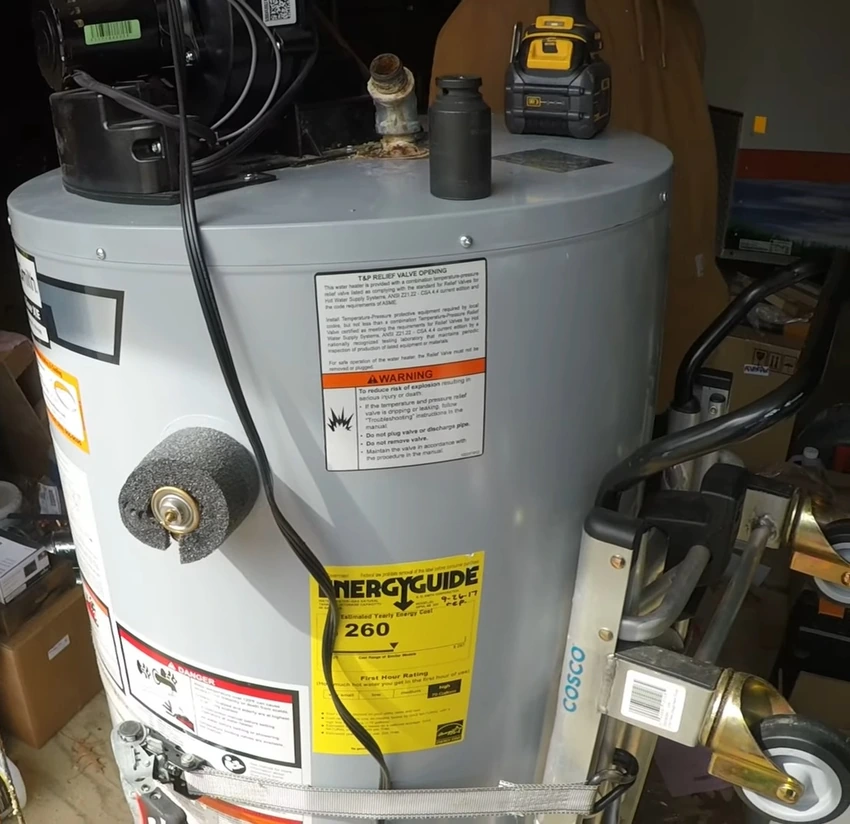
About 74% of Torrance homes were built between 1950 and 1979, according to SCAG housing data for Torrance. The city grew from about 20,000 people to more than 100,000 in the 1950s alone, with tracts of 200 to 500 homes going up almost on an assembly line, per the City of Torrance history. Pipes, water heaters and supply lines in those homes are now 45 to 75 years old. That’s where slow leaks, pinhole leaks and sudden bursts come from.
Leaks by season
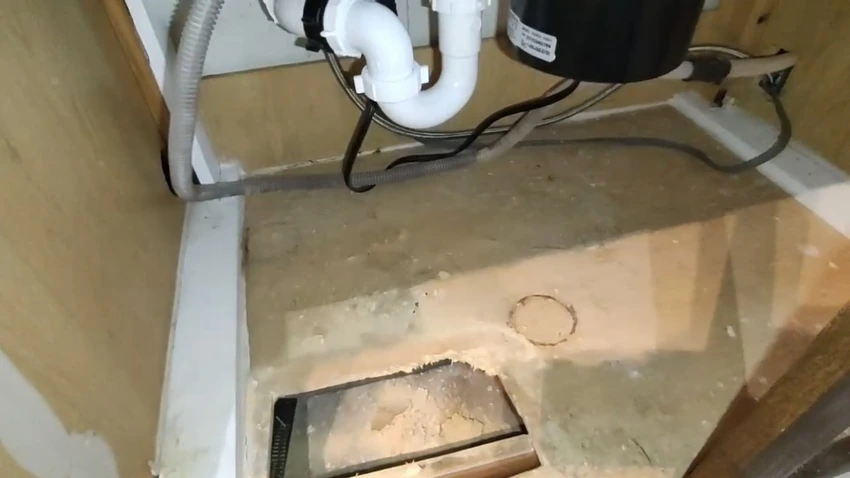
Google Trends data for the Los Angeles area (2021 to 2026) shows water damage searches peak from May through August, the dry months. That fits what crews see: dishwashers, washing machine hoses, AC drain lines, toilets and water heaters fail all year.
Then come the storms
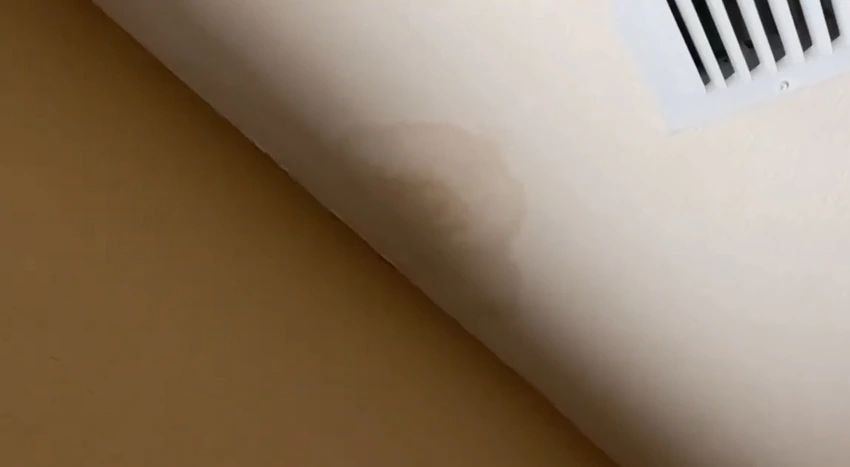
Most of Torrance’s rain falls from December through March. When it comes, it can come fast. In December 2014, about 2.34 inches fell in roughly two hours (ABC7, citing the National Weather Service), and streets between 190th Street and Carson, from Western to Van Ness, filled with water. Low spots, flat roofs and old gutters let water in.
Know your water
Is It Clean, Gray or Black Water?
The type of water decides how the job is done and what can be saved. Restoration pros sort it into three categories under the IICRC S500 standard. Clean water turns gray if it sits, so start drying fast.
Category 1: Clean
Where it comes from: broken supply line, water heater, faucet.
What it means: most materials can often be dried and kept.
Category 2: Gray
Where it comes from: washing machine or dishwasher drain, toilet overflow with no waste.
What it means: carpet pad and some soft goods usually go.
Category 3: Black
Where it comes from: sewage backup, outside flood water.
What it means: porous materials are removed and protective gear is required.
The process
How Water Damage Restoration Works, Step by Step
A good job follows the same order every time. Each step is explained in more detail on our process page.
Stop the source
A plumber fixes the leak first. Torrance Municipal Code Sec. 81.2.2 lets plumbers stop a leak without a permit, but replacing a bad pipe hidden inside a wall counts as new work and needs one.
Inspect and map the moisture
The tech uses a moisture meter and often a thermal camera to find water inside walls and under floors. Wet areas get marked and photographed.
Pull out the water
Pumps and extraction wands remove standing water from floors and carpet.
Open up what can’t dry
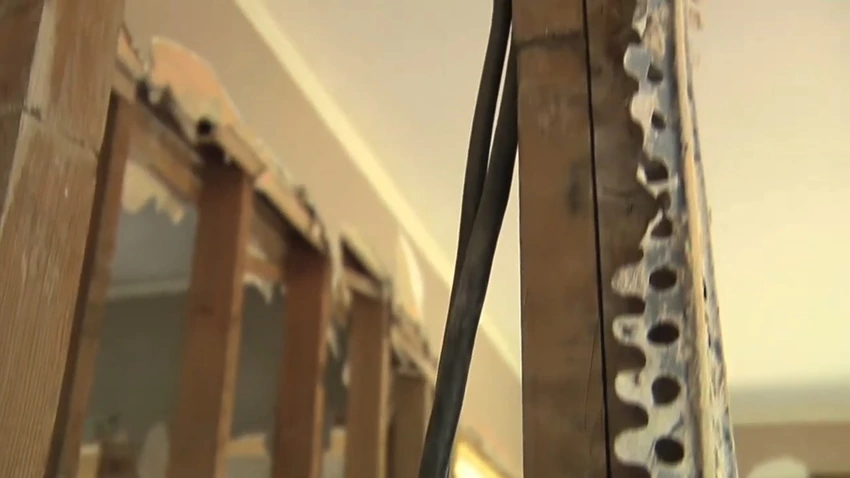
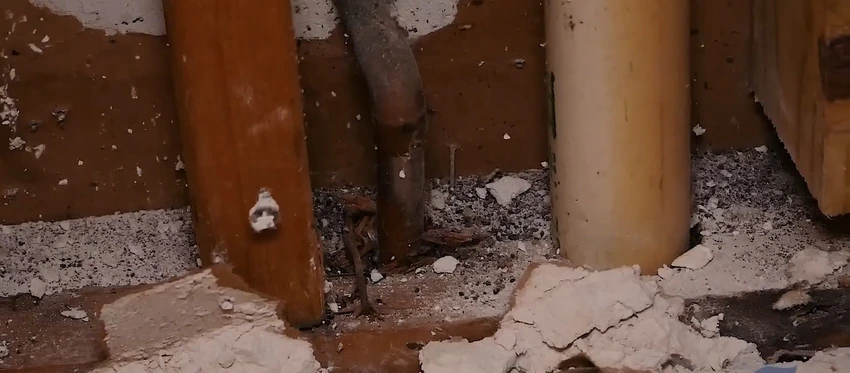
Soaked baseboards, carpet pad and the bottom of wet drywall may be cut out so air reaches the framing.
Dry with numbers
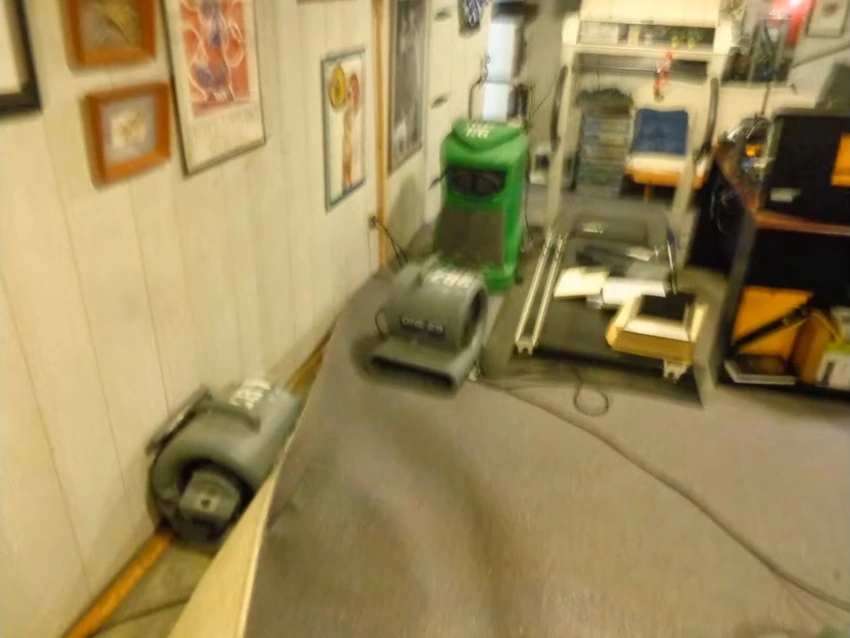
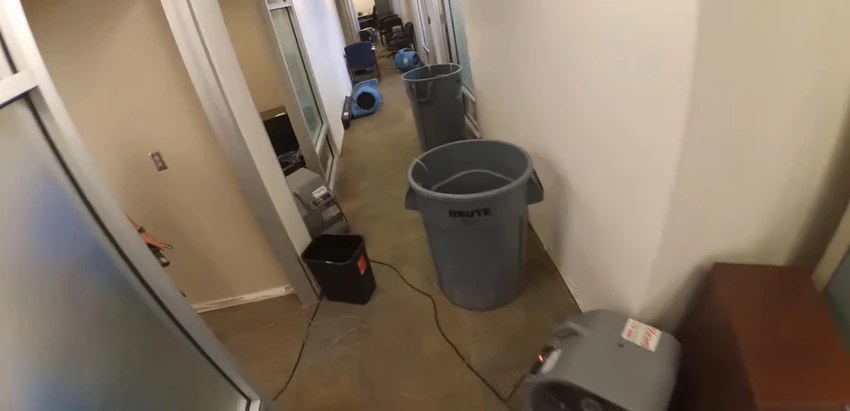
Air movers and dehumidifiers run, and the tech takes readings each visit until materials reach dry targets.
Clean and repair
Surfaces get cleaned, then drywall, paint and flooring go back in. Painting, tiling, carpet, cabinets and countertops don’t need a Torrance permit. Electrical work beyond small repairs does.
Timeline
How Long Does It Take to Dry Out a House?
Drying often takes several days. Repairs take longer.
It depends on how much water, how long it sat, and what got wet. A small clean leak on tile dries faster than water that soaked into hardwood. Hardwood, subfloor and plaster hold water longer than drywall.
Rebuilding can take a week for a small room or several weeks when cabinets and floors come out.
Don’t judge by touch
A wall can feel dry and still read wet inside. Ask for the daily moisture readings, and don’t let the fans leave until the numbers say dry.
Cost
How Much Does Water Damage Restoration in Torrance Cost?
Expect a few thousand dollars for most jobs. The national average is about $3,800, and most homeowners pay between about $1,400 and $6,300, according to HomeAdvisor and Angi 2025 data. Very small jobs start near $450. Large ones can pass $16,000.
These are national figures. Your written estimate is the number that counts. See the full cost and timeline guide.
| What drives the price | Why |
|---|---|
| Water type | About $3.50 per sq ft for clean water, $5.25 for gray, $7.50 for black (HomeAdvisor) |
| Size | More rooms, more equipment and more days |
| Time | Water that sat for days soaks deeper and grows mold |
| Materials | Hardwood, plaster and cabinets cost more to dry or replace |
| Rebuild | Drywall, paint and flooring are often billed separately |
| Mold | Mold remediation averages about $2,200 (HomeAdvisor) |
Water Damage Cost and Urgency Check
Answer four quick questions to see a rough national price, how urgent drying is, and what to do next. It takes about 20 seconds.
Rough cost for this size
Do this next
Price uses HomeAdvisor national averages: about $3.50, $5.25 and $7.50 per sq ft for clean, gray and black water. Mold timing is from the EPA mold guide. Your written estimate is the number that counts. Nothing you enter here is saved or sent.
Insurance
Will Homeowners Insurance Pay for It?
Usually yes for sudden water from inside the house, and no for flooding from outside. The California Department of Insurance puts it plainly: homeowners policies don’t cover flood damage, but they do cover other kinds of water damage.
Usually covered
Usually not covered
A few things help your claim
Flood is a separate policy
Flood coverage comes through the National Flood Insurance Program, and there’s usually a 30 day wait before a new policy starts, per FEMA FloodSmart. Torrance’s coastal flood maps were updated in April 2021 (LA County Public Works). The city’s floodplain line is (310) 618-5990, option 2.
Mold
What About Mold After a Leak?
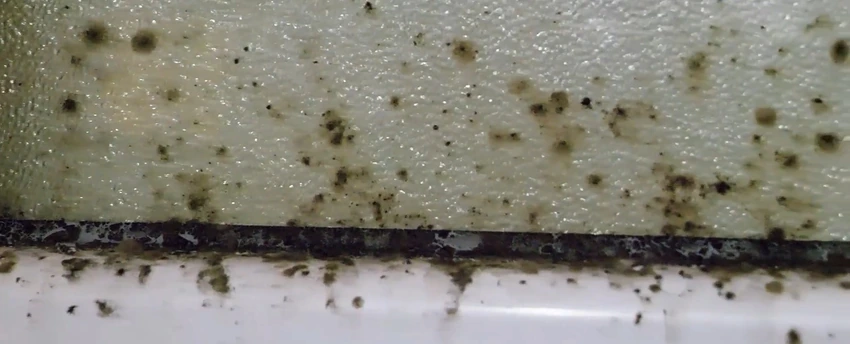
Mold can start growing in 24 to 48 hours on anything that stays wet. That’s why drying comes first.
You can usually clean a small patch yourself. The EPA puts the line at about 10 square feet, roughly a 3 by 3 foot spot. Bigger areas, mold inside walls, or mold after sewage call for a pro who sets up containment and removes the damaged material. Painting over mold doesn’t fix it. A California health department guide shared by LA County Public Health also warns that ozone machines don’t work on mold and can be harmful.
The 10 square foot rule
Under about 10 sq ft of mold on a hard surface: usually a DIY job with gloves, a mask and good airflow. Over that, inside walls, or after sewage: call a pro.
Shared walls
Condo Owners, Renters and Landlords
Water moves between units, so act fast and tell everyone in writing.
Condo owners
If water is coming from the unit above, tell your HOA and the neighbor right away. Your HOA documents and your insurance decide who pays for what. Start drying anyway, because waiting makes it worse for everyone.
Renters
Tell your landlord in writing and take photos. Under California law, visible mold or dampness that threatens health can make a rental substandard (CDPH renter booklet). Your belongings fall under your own renters policy.
Landlords
Get the tenant’s photos and the start time. A crew can meet the tenant if you’re away.
Protect yourself
How Do You Avoid Being Overcharged?
Ask before anyone tears out walls. Homeowners most often complain about bills far above the adjuster’s estimate, fans billed that weren’t running, and drying stopped too soon.
Service area
Areas We Cover Around Torrance
Calls come from every part of Torrance: Old Torrance and the El Prado area, North Torrance, West Torrance, Southwood, Walteria, El Nido and the Hollywood Riviera. Torrance Municipal Water serves about 78% of the city and Cal Water serves the rest, so who to call about a broken main depends on your street.
Nearby, crews also cover Redondo Beach, Hermosa Beach, Manhattan Beach, Lomita, Harbor City, Gardena, Hawthorne, Carson, Lawndale and the Palos Verdes Peninsula. See all service areas
Torrance neighborhoods
FAQ
Questions Torrance Homeowners Ask
Short answers to what people ask most when water gets in.
Still not sure what to do?
Tell us what got wet and when it started. Calls are answered day and night, and it costs nothing to ask.
Water in Your Home Right Now?
Shut off the water, take your photos, and call. A local crew will ask a few questions, give you a time, and start drying once you approve the work.